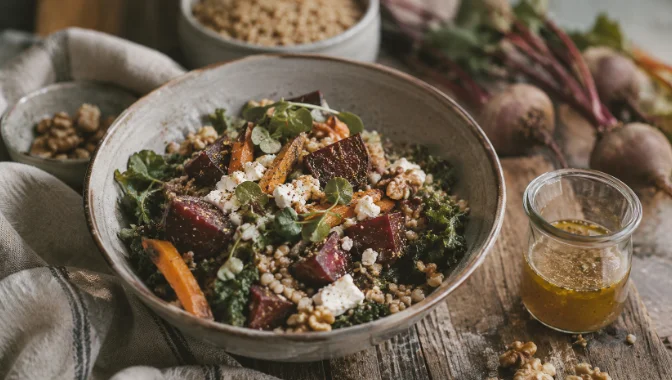
The Best Dressings for Winter Salads and Roasted Vegetables
Winter salads deserve more than a handful of lettuce and a drizzle of olive oil. Roasted beets, shredded cabbage, caramelized carrots, nutty barley and tender lentils offer plenty of possibilities for creating satisfying meals during the colder months.
The best winter salad dressings balance the natural sweetness of roasted vegetables, soften the bitterness of hardy greens and bring brightness to earthy ingredients. With a few pantry staples and five versatile dressing recipes, you can turn seasonal vegetables into interesting salads, grain bowls and make-ahead lunches throughout winter.
Why Winter Salads Need a Different Kind of Dressing
Summer salads often rely on juicy tomatoes, crisp cucumbers and delicate greens that need little more than a light vinaigrette. Winter ingredients tend to be denser, earthier and more substantial.
Roasting carrots, squash and parsnips concentrates their natural sweetness. Cabbage and kale have firmer textures, while cooked grains and legumes can absorb considerable amounts of dressing.
These characteristics influence the type of dressing that works best.
A sharp apple cider vinaigrette cuts through the sweetness of roasted vegetables. Creamy tahini provides richness to grain bowls, while mustard and balsamic vinegar complement earthy ingredients such as beets, lentils and mushrooms.
Winter salads also offer more opportunities to combine warm and cold ingredients. A bowl of warm barley, roasted squash and fresh kale can be just as appealing as a traditional chilled salad, particularly when finished with a bright, creamy dressing.
The Vegetables That Make Winter Salads Work
Seasonal cooking does not mean relying exclusively on vegetables harvested during winter. Many Canadian-grown vegetables harvested in autumn are suitable for storage and remain available during the colder months.
Foodland Ontario’s seasonal availability guide, for example, identifies carrots as available year-round and lists cabbage, beets and parsnips among vegetables available during winter. Availability elsewhere in Canada varies according to growing conditions, storage facilities and regional supply. Foodland Ontario+3
Cabbage and Hardy Greens
Red cabbage, green cabbage and kale provide a sturdy foundation for winter salads. Unlike delicate lettuce, they can handle stronger dressings and benefit from a little time to absorb flavour.
Finely shredded cabbage works particularly well with apple cider vinegar, mustard and maple syrup. Kale pairs nicely with creamy lemon or tahini dressings, especially when the leaves are gently massaged before serving.
Carrots, Beets and Parsnips
Root vegetables become noticeably sweeter when roasted. A dressing with sufficient acidity prevents the finished salad from becoming overly sweet or heavy.
Carrots pair beautifully with mustard and maple, while beets benefit from the deeper flavour of balsamic vinegar. Parsnips work well with sharp vinaigrettes, particularly those containing Dijon mustard and fresh herbs.
Raw grated carrots and beets can also add colour and crunch to winter salads without requiring any cooking.
Squash and Roasted Vegetables
Butternut squash, acorn squash, cauliflower and Brussels sprouts create substantial salads that can be served warm or cold.
Creamy tahini complements the soft texture of roasted squash, while miso-based dressings bring savoury depth to Brussels sprouts and cauliflower.
If the vegetables are already generously coated with oil from roasting, choose a dressing with more acidity or a lighter consistency.
Grains and Pulses for Heartier Salads
Barley, wild rice, lentils and chickpeas help turn a vegetable salad into a complete lunch.
These ingredients are particularly useful during winter because they are easy to keep in the pantry and combine with a wide variety of seasonal produce. Canadian-grown lentils and other pulses are natural additions to this style of cooking.
Grains and pulses also provide a mild foundation for stronger dressings that might overwhelm a bowl of delicate greens.
Matching Winter Vegetables with the Right Dressing
The easiest way to choose a dressing is to consider both the vegetable and how it has been prepared.
| Vegetable | Preparation | Recommended dressing |
|---|---|---|
| Red cabbage | Raw, shredded | Apple cider and mustard |
| Carrots | Roasted | Maple Dijon |
| Beets | Roasted | Balsamic and thyme |
| Butternut squash | Roasted | Lemon tahini |
| Kale | Raw or lightly cooked | Creamy lemon tahini |
| Parsnips | Roasted | Mustard vinaigrette |
| Brussels sprouts | Roasted | Miso and maple |
| Cauliflower | Roasted | Lemon tahini |
| Green cabbage | Raw, shredded | Maple Dijon |
| Mushrooms | Roasted | Balsamic and thyme |
Think of these combinations as starting points rather than fixed recipes.
If your salad contains several sweet vegetables, such as roasted carrots, squash and parsnips, choose a sharper dressing with less sweetener. If it contains bitter greens or earthy lentils, a small amount of maple syrup can help bring the flavours together.
Five Dressings Worth Making During Winter
These five plant-based dressings cover a wide range of seasonal vegetables and salad combinations. Each recipe makes approximately four to six servings, depending on the size of your salad.
1. Maple Dijon Vinaigrette
Maple syrup and Dijon mustard create a balanced combination of sweetness, acidity and gentle heat. This dressing works particularly well with roasted vegetables and crunchy cabbage salads.
Ingredients:
- 4 tablespoons extra-virgin olive oil or canola oil
- 2 tablespoons apple cider vinegar
- 1 tablespoon Dijon mustard
- 2 teaspoons pure maple syrup
- ¼ teaspoon salt
- Freshly ground black pepper to taste
Method: Combine the vinegar, mustard, maple syrup and seasoning in a small bowl. Gradually whisk in the oil until smooth.
Yield: Approximately 115–120 mL.
Best with: Roasted carrots, cabbage, Brussels sprouts, barley, apples and green lentils.
For vegetables that are already quite sweet, reduce the maple syrup to one teaspoon. A little extra vinegar can also help balance richer roasted ingredients.
2. Apple Cider and Mustard Dressing
This sharper vinaigrette is particularly suitable for raw winter vegetables. Apple cider vinegar brings a fruity tang that complements cabbage, carrots and apples without making the salad feel heavy.
Ingredients:
- 4 tablespoons canola oil
- 2 tablespoons apple cider vinegar
- 2 teaspoons whole-grain mustard
- 1 teaspoon pure maple syrup
- ¼ teaspoon salt
- Black pepper to taste
Method: Combine all the ingredients in a clean jar, seal and shake until evenly mixed.
Yield: Approximately 105–110 mL.
Best with: Shredded cabbage, grated carrots, sliced apples, roasted parsnips and chickpeas.
Whole-grain mustard adds texture, but Dijon works equally well if you prefer a smoother dressing.
3. Lemon Tahini Dressing
Tahini brings a creamy, satisfying texture to winter salads without dairy or added nuts. Its earthy sesame flavour works particularly well with roasted squash, cauliflower and hearty greens.
Ingredients:
- 3 tablespoons tahini
- 2 tablespoons fresh lemon juice
- 3 tablespoons water, plus more as needed
- 1 small garlic clove, finely grated
- ¼ teaspoon ground cumin
- ¼ teaspoon salt
- Black pepper to taste
Method: Whisk the tahini, lemon juice, garlic and seasoning together. The mixture may become quite thick initially. Gradually add water while whisking until the dressing becomes smooth and pourable.
Yield: Approximately 125 mL (½ cup).
Best with: Butternut squash, roasted cauliflower, kale, chickpeas, barley and sweet potatoes.
For a brighter dressing, add a little lemon zest. For a warmer, more aromatic flavour, increase the cumin or add a pinch of smoked paprika.
4. Balsamic and Thyme Dressing
Balsamic vinegar and thyme complement the earthy sweetness of roasted beets and mushrooms. This dressing is particularly effective in salads containing lentils or other ingredients with naturally mild flavours.
Ingredients:
- 4 tablespoons extra-virgin olive oil
- 2 tablespoons balsamic vinegar
- 1 teaspoon Dijon mustard
- ½ teaspoon dried thyme
- 1 teaspoon pure maple syrup
- ¼ teaspoon salt
- Freshly ground black pepper
Method: Whisk together the balsamic vinegar, mustard, thyme, maple syrup and seasoning. Slowly add the olive oil while whisking to create an emulsion.
Yield: Approximately 100–105 mL.
Best with: Roasted beets, mushrooms, lentils, red onions, spinach and farro.
If your balsamic vinegar already has a pronounced sweetness, leave out the maple syrup. Fresh thyme can replace dried thyme whenever it is available.
5. Miso and Maple Dressing
Miso adds savoury depth that balances the natural sweetness of roasted vegetables. A small amount of maple syrup rounds out its salty flavour, while rice vinegar keeps the dressing bright.
Ingredients:
- 2 tablespoons white miso paste
- 2 tablespoons canola oil
- 2 tablespoons unseasoned rice vinegar
- 2 teaspoons pure maple syrup
- 1 teaspoon freshly grated ginger
- 1–2 tablespoons water
Method: Whisk the miso, rice vinegar, maple syrup and ginger until smooth. Gradually incorporate the oil and add enough water to achieve your preferred consistency.
Yield: Approximately 120–135 mL.
Best with: Roasted Brussels sprouts, cauliflower, carrots, cabbage, brown rice and tofu.
For a spicier version, add a pinch of chilli flakes. Taste before adding salt, as miso already contributes considerable saltiness. Check the ingredients when purchasing miso to ensure it is suitable for a vegan diet.
Dressing Warm Vegetables Versus Cold Salads
Temperature affects how a dressing behaves, how its flavours develop and how well it coats different ingredients. The same vinaigrette can produce noticeably different results depending on when you add it.
When to Dress Roasted Vegetables
For a warm salad, toss roasted vegetables with a small amount of vinaigrette shortly after removing them from the oven.
Warm vegetables can absorb some of the dressing, while their natural sweetness becomes more balanced by the acidity.
Start with approximately 15–30 mL (1–2 tablespoons) of dressing per 250 g of roasted vegetables, then adjust according to taste.
Avoid adding too much at once. Vegetables that have already been roasted with oil generally need less dressing than steamed or boiled vegetables.
When to Let Vegetables Cool First
If you are combining roasted vegetables with spinach, romaine or other delicate greens, allow the vegetables to cool slightly before assembling the salad.
Hot vegetables can wilt the leaves and create excess moisture. For make-ahead salads, cool cooked ingredients promptly and refrigerate them before combining them with fresh greens.
Creamy dressings are generally best added just before serving, particularly when you want an attractive drizzle rather than a fully coated salad.
Making Creamy Dressings Pourable
Tahini-based dressings often become thicker during refrigeration. Rather than adding extra oil, whisk in water one teaspoon at a time until the dressing reaches the desired consistency.
For warm grain bowls, a slightly thinner dressing helps distribute flavour throughout the grains. For roasted squash or cauliflower served on a platter, a thicker consistency creates a more substantial coating.
Turning Leftover Roasted Vegetables into Tomorrow’s Lunch
Roasting a little extra squash, carrots or cauliflower at dinner is an easy way to prepare part of tomorrow’s lunch without planning an entirely separate meal.
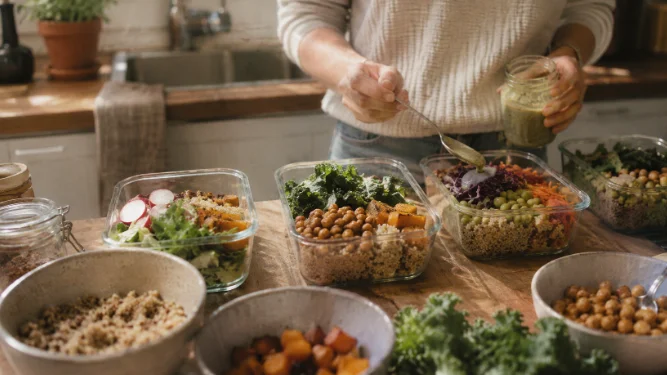
A tray of roasted vegetables can become the starting point for several plant-based lunch meal prep ideas, especially when you change the grains, pulses and dressings throughout the week.
For example, leftover roasted carrots can be combined with lentils and maple Dijon dressing one day, then paired with chickpeas and lemon tahini the next.
The vegetables do not necessarily need reheating. Roasted squash, beets and carrots can all work well in chilled grain salads.
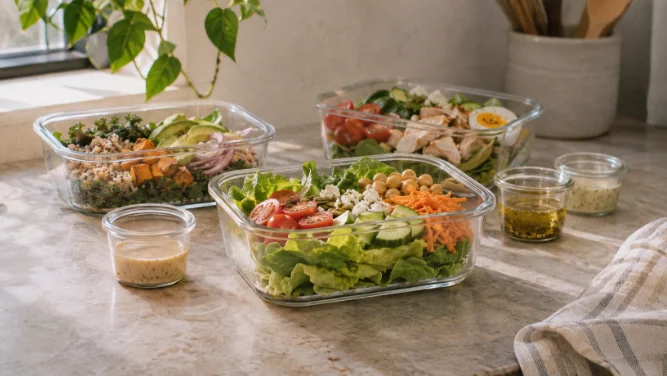
Keep cooked ingredients and dressings in separate, sealed containers in the refrigerator. Health Canada recommends refrigerating cooked leftovers promptly, keeping the refrigerator at 4°C or colder and consuming leftovers within two to three days or freezing them for later use.
Preparing smaller batches of dressing also helps reduce waste, particularly when recipes contain fresh garlic or other perishable ingredients.
Three Winter Salad Combinations to Keep on Rotation
Roasted Beet, Lentil and Balsamic Salad
Ingredients:
- 1 cup roasted beets, cut into bite-sized pieces
- ½ cup cooked green lentils
- 1 cup baby spinach or chopped kale
- 2 tablespoons pumpkin seeds
- 2 tablespoons balsamic and thyme dressing
Combine the beets and lentils, add the greens and toss gently with the dressing. Finish with pumpkin seeds for texture.
The balsamic vinegar balances the earthy flavours of the beets and lentils, while the seeds provide a pleasant contrast to the softer ingredients.
Crunchy Cabbage, Apple and Maple Dijon Salad
Ingredients:
- 1½ cups shredded red or green cabbage
- ½ cup grated carrots
- ½ apple, thinly sliced
- ½ cup cooked chickpeas
- 1 tablespoon sunflower seeds
- 2 tablespoons maple Dijon vinaigrette
Toss the cabbage, carrots and chickpeas with the dressing. Add the apple and sunflower seeds shortly before serving.
This combination works particularly well as a packed lunch because cabbage retains its texture better than delicate leafy greens. A tart apple provides a nice contrast to the maple syrup.
Warm Barley, Squash and Tahini Bowl
Ingredients:
- ¾ cup cooked barley
- 1 cup roasted butternut squash
- ½ cup cooked chickpeas
- ½ cup chopped kale
- 2 tablespoons lemon tahini dressing
Combine the warm barley, squash and chickpeas in a bowl. Add the kale and finish with a generous drizzle of tahini dressing.
The barley provides a pleasantly chewy texture, while the squash brings sweetness and the lemon dressing keeps the combination from feeling too rich.
If barley is unavailable, substitute cooked brown rice or quinoa.
Building a Winter Dressing Pantry
A well-stocked pantry makes seasonal cooking considerably easier. Most winter salad dressings can be prepared using a relatively small selection of ingredients.
The most useful staples include:
- Extra-virgin olive oil: For herb dressings and traditional vinaigrettes.
- Canola oil: A mild, versatile oil that allows other flavours to stand out.
- Apple cider vinegar: Particularly useful for cabbage, carrots and apple salads.
- Balsamic vinegar: An excellent match for beets, mushrooms and lentils.
- Rice vinegar: Provides a gentle acidity for miso-based dressings.
- Dijon and whole-grain mustard: Add flavour and help emulsify vinaigrettes.
- Pure maple syrup: Balances sharp, bitter and earthy flavours.
- Tahini: Creates creamy dressings without dairy.
- White miso: Adds savoury depth to grain bowls and roasted vegetables.
- Dried herbs and spices: Thyme, cumin, smoked paprika and oregano provide variety throughout winter.
- Fresh lemons: Bring brightness to creamy sauces and vinaigrettes.
Although these dressing recipes contain no intentionally added peanuts or tree nuts, ingredients such as sesame, mustard and soy are also recognized as priority food allergens in Canada. Always check product labels and consider cross-contact risks when cooking for someone with food allergies.
Winter salads become much more interesting when you stop thinking of them as substitutes for summer salads. Cabbage, roasted root vegetables, grains and pulses have their own textures and flavours, and the right dressing brings out their best qualities.
Keep one tangy vinaigrette and one creamy dressing in your fridge, buy vegetables according to seasonal availability and use what you already have. Even a simple combination of roasted carrots, lentils and homemade dressing can become a satisfying winter lunch worth making again.