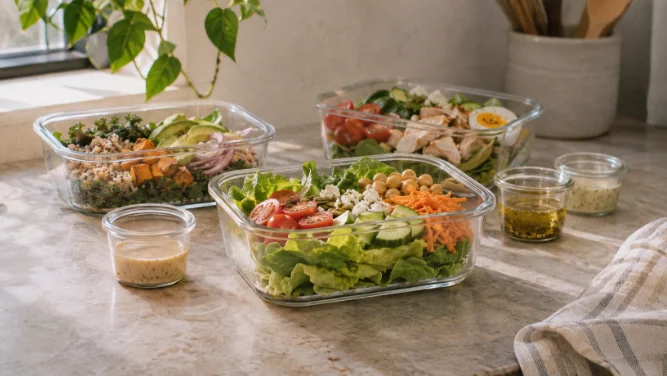
How to Meal Prep Salads Without Them Getting Soggy
A salad that looks fresh and colourful on Sunday can turn into a disappointing lunch by Tuesday. Wilted lettuce, watery cucumbers and a pool of dressing at the bottom of the container are familiar problems, but they are surprisingly easy to prevent.
The secret to successful salad meal prep is managing moisture, choosing ingredients that hold their texture and knowing when to add the dressing. A few small changes to your preparation routine can make homemade salads just as appealing at lunchtime as they were when you first made them.
Why Meal Prep Salads Become Soggy
Most soggy salads are the result of three things: excess moisture, prolonged contact with dressing and condensation. Understanding what causes these problems makes it easier to prepare salads that stay crisp without buying special equipment.
Moisture from Cut Vegetables
Vegetables such as cucumbers and tomatoes contain plenty of water. Cutting them damages their cells, allowing moisture to escape gradually during storage.
That liquid collects at the bottom of the container, where it can soften leafy greens, dilute the dressing and change the texture of other ingredients.
Choose firmer vegetables for salads you intend to prepare ahead. Cherry tomatoes are particularly useful because you can leave them whole until lunchtime. Cucumbers can be stored separately or cut into thicker pieces rather than thin slices.
Even washed lettuce can cause problems if it has not been dried properly. A salad spinner is useful, but a clean kitchen towel works well too.
What Salt and Acid Do to Leafy Greens
Salt draws moisture out of vegetables through osmosis, while prolonged exposure to dressing can change the texture of delicate leaves.
This is why a freshly dressed salad tastes wonderful at dinner but rarely makes an equally appealing lunch the following day.
Romaine, baby spinach and mixed spring greens benefit from being dressed immediately before eating. Sturdier vegetables, such as shredded cabbage and kale, tolerate dressing better and sometimes develop a more pleasant texture after a short period of marinating.
The type of salad matters more than the dressing itself.
Condensation from Warm Ingredients
Adding freshly cooked quinoa, lentils or roasted vegetables to a container of cold greens creates another source of moisture.
Steam becomes trapped inside the container, condenses against the lid and eventually drips back onto the ingredients.
Cool cooked components promptly in shallow containers and refrigerate them before assembling your salads. Besides protecting the texture of your greens, proper cooling is an essential part of safe food preparation.
Choose Ingredients That Hold Their Texture
Some vegetables are naturally better suited to make-ahead salads than others. Building your lunches around sturdy ingredients gives you more flexibility and reduces the amount of preparation needed each morning.
The following comparison focuses on texture and preparation rather than safe storage times.
| Ingredient | Texture stability | Preparation advice |
|---|---|---|
| Green or red cabbage | High | Shred ahead and refrigerate undressed |
| Kale | High | Remove tough stems and chop |
| Carrots | High | Grate, shred or cut into matchsticks |
| Bell peppers | High | Slice and dry before packing |
| Romaine lettuce | Moderate | Wash, dry thoroughly and store separately |
| Chickpeas | High | Rinse and drain well |
| Cooked quinoa | High when properly cooled | Refrigerate before assembling |
| Cucumber | Moderate | Pack separately when practical |
| Tomatoes | Lower once cut | Keep cherry tomatoes whole |
| Avocado | Low once cut | Slice shortly before eating |
| Crispy roasted chickpeas | Low in moist environments | Keep separate until serving |
Cabbage is particularly useful during autumn and winter, when locally grown or stored vegetables may be more practical than delicate salad greens.
A combination of shredded cabbage, carrots, cooked lentils and an apple cider vinaigrette makes a simple, sturdy lunch without relying on summer produce.
Remember that texture stability does not indicate microbiological safety. An ingredient can remain crisp and look perfectly fresh even when it should no longer be eaten.
The Best Way to Layer a Meal Prep Salad
A good container keeps wetter ingredients away from delicate ones. The right choice depends on what you are packing, how you travel and whether you have access to a bowl at lunchtime.
Mason Jar Salads
Mason jars work particularly well for layered salads because their upright shape allows you to separate the dressing from the greens.
Build your salad from the bottom upwards:
- Dressing: Start with approximately 15–30 mL (1–2 tablespoons).
- Firm vegetables: Add carrots, cabbage or other ingredients that tolerate contact with dressing.
- Plant protein: Add well-drained chickpeas, lentils or tofu.
- Grains: Layer cooled quinoa, barley or brown rice.
- Leafy greens: Finish with thoroughly dried romaine, kale or spinach.
Keep the jar upright during storage and transportation. At lunchtime, empty it into a bowl and toss everything together.
Wide-mouth jars are easier to fill and empty than narrow-necked ones. A 750 mL to 1 L jar is a useful starting size for a substantial lunch, depending on your appetite and ingredients.
Avoid packing the contents so tightly that there is no room to distribute the dressing.
Divided Lunch Containers
A divided container is often more practical for commuters, students and anyone who wants to eat directly from their lunchbox.
Keep the leafy greens in the largest compartment, cooked grains and plant proteins in another, and the dressing in a small leakproof container.
Unlike a Mason jar, a divided lunchbox does not rely on remaining upright throughout your journey when its compartments are individually sealed. It also allows you to keep ingredients separate until you decide how much dressing to use.
When a Separate Dressing Container Works Best
For delicate leafy salads, a separate dressing container is usually the most reliable option.
It is particularly useful when your lunch contains avocado, toasted seeds, crispy chickpeas or vegetables that release moisture. It also works better with thick dressings that may be difficult to distribute by shaking a jar.
A regular airtight food container and a small reusable dressing pot are enough. There is no need to purchase a dedicated salad preparation system.
How to Pack Different Types of Dressing
Not every dressing behaves the same way in a packed lunch. A thin vinaigrette moves easily between layers, while a creamy dressing tends to stay where you put it. Both can work well for meal prep with a little attention to consistency and storage.
Oil-and-Vinegar Dressings
Homemade vinaigrettes naturally separate during storage. Olive oil may also become cloudy or partially solidify in the fridge.
Neither is necessarily a sign that something has gone wrong. Shake the sealed container just before serving to redistribute the ingredients.
A small amount of Dijon mustard helps maintain an emulsion, allowing the dressing to coat the salad more evenly instead of collecting underneath it.
Lemon vinaigrette, balsamic dressing and apple cider vinaigrette are particularly versatile for packed lunches.
Creamy Tahini and Tofu Dressings
Tahini dressing often thickens as it sits in the fridge. Preparing it slightly thinner than you would for an immediate meal can make it easier to pour at lunchtime.
Alternatively, stir in a little drinking water just before serving.
Silken tofu and plant-based yogurt dressings are best packed separately and kept refrigerated. Make smaller batches rather than preparing enough creamy dressing for an entire week.
Creamy dressings pair particularly well with grain bowls, shredded cabbage, roasted vegetables and kale.
Dressings for Cabbage and Kale Salads
Not every salad needs to remain undressed until lunchtime.
A cabbage slaw can benefit from absorbing some vinaigrette overnight, while massaging kale with a little dressing can soften its fibrous leaves and make them more pleasant to eat.
If you enjoy a softer texture, dressing these vegetables ahead of time is perfectly reasonable, provided they are handled and refrigerated safely.
Keep crunchy toppings separate, even when the vegetables have already been dressed.
A Practical Meal Prep Schedule for Weekday Salads
Preparing five complete salads on Sunday may seem efficient, but it leaves little room for changing appetites, unexpected dinner leftovers or ingredients that deteriorate faster than expected.
A better approach is to prepare components in smaller batches and assemble salads as needed.
| Day | Preparation |
|---|---|
| Sunday | Wash and dry vegetables, cook grains and prepare ingredients for Monday and Tuesday. |
| Monday | Assemble lunch and pack the dressing separately. |
| Tuesday evening | Prepare a fresh batch of cooked ingredients and replenish vegetables as needed. |
| Wednesday | Assemble lunches using the newly prepared components. |
| Thursday evening | Check remaining ingredients and prepare anything needed for Friday. |
| Friday | Make a fresh salad using suitable ingredients that are still within their recommended storage periods. |
Preparing salads in smaller batches is much easier when they are part of a flexible plant-based lunch prep routine rather than five identical lunches made on Sunday.
You can also prepare ingredients at different levels of readiness. Shredded cabbage, washed carrots and unopened canned chickpeas offer flexibility without requiring you to commit to a particular salad several days in advance.
This approach works especially well in smaller households, where preparing too many ingredients at once can lead to unnecessary food waste.
Keeping Packed Lunches Cold and Safe
Keeping a salad crisp and keeping it safe to eat are two different things. A salad may still look appetizing even when harmful bacteria are present.
Health Canada recommends keeping refrigerated food at 4°C or colder and consuming refrigerated leftovers within two to three days or freezing them for later use. Perishable food that has remained at room temperature for more than two hours should be discarded.
For meal prep salads containing cooked grains, legumes, tofu or roasted vegetables, use the age of the oldest perishable ingredient as your starting point. Adding freshly washed lettuce to quinoa cooked several days earlier does not restart its storage period.
Wash fresh vegetables under cool, running drinking water before preparation. Sealed, ready-to-eat greens labelled as pre-washed do not require additional washing.
If you commute to work or university, pack your salad in an insulated lunch bag with an ice pack and refrigerate it when you arrive.
Do not assume that cold outdoor temperatures during winter will keep food consistently refrigerated. A heated vehicle, public transit journey or warm office can quickly change storage conditions.
For school lunches, check the school’s allergy policy as well. Plant-based dressings may contain sesame, soy or mustard, even when they contain no peanuts or tree nuts.
Three Salad Combinations That Travel Well
These combinations are built around ingredients that retain their texture reasonably well when prepared and stored properly. Each makes approximately one substantial lunch, with quantities that can be adjusted to suit your appetite.
Crunchy Chickpea and Cabbage Salad
- 1 cup shredded red or green cabbage
- ½ cup cooked chickpeas
- ½ cup shredded carrots
- 2 tablespoons chopped parsley
- 1 tablespoon pumpkin seeds
- 1–2 tablespoons apple cider and Dijon vinaigrette
The cabbage and carrots provide crunch, while chickpeas add substance. A tangy vinaigrette balances the mild flavour of the legumes.
Keep the pumpkin seeds separate until serving. This salad works particularly well during the colder months when cabbage and carrots are convenient fridge staples.
Mediterranean Quinoa Salad
- ¾ cup cooked and cooled quinoa
- ½ cup cooked chickpeas
- ½ cup chopped cucumber
- ½ cup whole cherry tomatoes
- 2 tablespoons chopped parsley
- 1–2 tablespoons lemon and oregano vinaigrette
Quinoa absorbs some dressing without losing its structure as quickly as delicate leafy greens.
For better texture, pack the cucumber separately and leave the tomatoes whole. Add a few olives or chopped roasted red peppers if you want a more pronounced Mediterranean flavour.
Kale and Roasted Vegetable Salad
- 1½ cups chopped kale
- ¾ cup roasted squash and carrots
- ½ cup cooked lentils
- 1 tablespoon sunflower seeds
- 1–2 tablespoons lemon tahini dressing
The combination of hearty greens, sweet roasted vegetables and creamy tahini makes this a satisfying lunch that does not require reheating.
Cool the roasted vegetables before assembling, and store the sunflower seeds separately for a little extra crunch.
Depending on the season, substitute roasted beets, cauliflower or sweet potatoes for the squash.
A Quick Checklist Before Packing Your Lunch
Before sealing your salad container, check the following:
- Leafy greens have been thoroughly dried.
- Cooked ingredients have been properly cooled.
- Wet vegetables are separated from delicate greens.
- Dressing is packed separately or beneath sturdy ingredients.
- Nuts, seeds and crunchy toppings are kept dry.
- Perishable ingredients are within their recommended storage periods.
- An ice pack is available if the salad will travel without refrigeration.
A good make-ahead salad does not require elaborate recipes, expensive containers or hours of weekend preparation. Start with a few sturdy vegetables, a satisfying plant protein and a homemade dressing you genuinely enjoy. Keep the ingredients that need protection separate, prepare fresh components when necessary, and assemble your lunch around what is already available.
The less time your delicate ingredients spend sitting in moisture, the better your salad will taste when you finally sit down to eat.