Plant-Based Lunch Meal Prep: A Practical Guide to Better Weekday Lunches
Preparing five identical lunches on Sunday sounds like a sensible way to save time, until Wednesday arrives and you would rather eat almost anything else. A fridge full of matching containers is not necessarily the answer to easier weekday cooking.
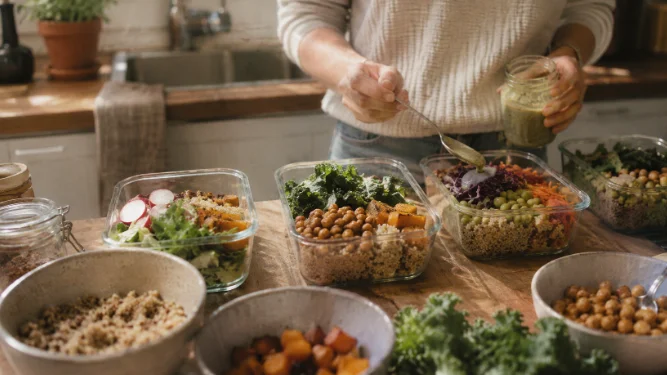
A more flexible approach to plant-based lunch meal prep is to prepare individual ingredients that can be combined in different ways. With a couple of grains, some vegetables, a few plant-based proteins and two homemade dressings, you can create satisfying lunches without cooking from scratch every morning or buying ingredients for five unrelated recipes.
Why Traditional Meal Prep Does Not Work for Everyone
Meal prep is supposed to make everyday life easier. However, preparing an entire week of complete meals in one session can introduce problems of its own, from repetitive lunches to unnecessary food waste.
Eating the Same Lunch Every Day
Even a favourite recipe can become less appealing after several consecutive meals. The problem is not necessarily the ingredients but the lack of variety in flavour and texture.
Consider a batch of cooked chickpeas. On Monday, they can go into a quinoa salad with lemon vinaigrette. On Tuesday, they can accompany roasted vegetables and a creamy tahini dressing. A freshly opened or properly stored portion can become the filling for a vegetable wrap later in the week.
The same basic ingredient serves several purposes without making every lunch feel identical.
Buying Ingredients for Too Many Recipes
Planning five completely different lunches creates another problem: a long shopping list.
One recipe calls for fresh cilantro, another requires half a cabbage, and a third needs a small amount of an ingredient you rarely use. By the end of the week, several partially used vegetables and herbs may still be sitting in the fridge.
Choosing ingredients that work across multiple meals reduces the number of purchases and gives you more flexibility if your plans change.
Preparing More Food Than You Actually Need
Work schedules change, dinner leftovers become available, and some days you may decide to eat lunch elsewhere.
Preparing smaller batches leaves room for these changes. It also makes it easier to follow recommended food storage periods rather than assuming everything prepared on Sunday will remain suitable until Friday.
The Component-Based Approach to Plant-Based Lunches
Instead of preparing complete meals, think of your lunch as a combination of five elements: a base, plant protein, vegetables, dressing and a finishing ingredient.
Canada’s Food Guide offers a useful framework for building balanced meals, with approximately half the plate consisting of vegetables and fruits, one-quarter whole grain foods and one-quarter protein foods. The guide also encourages choosing plant-based protein foods more often.
A grain bowl or substantial salad can follow the same general principles, even when the ingredients are mixed together rather than arranged separately.
Choose One or Two Bases
A base gives your lunch structure and helps make it more substantial.
Useful options include:
- Quinoa
- Pearl or pot barley
- Brown rice
- Bulgur
- Whole grain couscous
- Wild rice
- Shredded cabbage
- Romaine lettuce
- Whole grain wraps
Choose one or two grains rather than cooking several different varieties at once. Quinoa and barley, for example, offer contrasting textures while working with many of the same vegetables and dressings.
Whole grains such as quinoa, brown rice and hulled barley are particularly useful when you want to follow the whole grain component of Canada’s Food Guide.
Prepare Versatile Plant Proteins
Chickpeas, lentils, beans, edamame and tofu are convenient ingredients for homemade vegan lunches.
Canned chickpeas and beans require minimal preparation. Dried lentils are useful when you have time to cook a batch, while firm tofu can be baked or pan-fried and paired with several different sauces.
If you find yourself feeling hungry shortly after eating a salad, look at what went into it. A bowl of lettuce, cucumber and tomato with vinaigrette may be delicious, but adding legumes, tofu and whole grains can make it a more substantial meal.
Combine Fresh and Cooked Vegetables
Using both fresh and cooked vegetables creates variety without requiring additional recipes.
A tray of roasted carrots, cauliflower and squash can provide sweetness and softer textures, while shredded cabbage, cucumbers and bell peppers add freshness and crunch.
During warmer months, you might rely more heavily on fresh produce. In colder weather, roasted vegetables and hardy greens become particularly useful.
Choose vegetables according to their intended use. Carrots and cabbage can be prepared ahead, while avocado and other ingredients that deteriorate quickly after cutting are often better added shortly before eating.
Use Dressings to Create Different Flavours
Dressing is the component that allows the same ingredients to become different meals.
A lemon vinaigrette gives chickpeas and quinoa a light, fresh character. Miso-ginger dressing makes rice, tofu and broccoli taste richer and more savoury. Maple Dijon brings out the natural sweetness of roasted root vegetables.
Rather than buying several bottled sauces, prepare small batches of homemade dressing using ingredients you already keep in the pantry.
Finish with Something Crunchy or Fresh
A finishing ingredient can make an otherwise familiar lunch more interesting.
Pumpkin seeds, sunflower seeds, fresh parsley, sliced green onions, chopped dill or a little lemon zest all add something different to the finished meal.
Keep crunchy toppings separate until lunchtime. Seeds and crispy roasted chickpeas can lose their texture when stored in contact with moist vegetables or dressing.
Build a Weekly Shopping List Without Overbuying
A practical meal prep shopping list starts with the ingredients already available in your kitchen, not with a collection of recipes.
Check your fridge, freezer and pantry before deciding what to buy. An unopened bag of barley, half a cabbage and a jar of tahini are already the beginnings of several lunches.
Start with What Is Already in Your Pantry
Keep a small selection of ingredients that allow you to prepare meals without making an additional shopping trip.
Dried grains, canned legumes, olive oil, canola oil, vinegar, mustard, tahini and dried herbs provide a useful foundation.
Frozen vegetables are equally valuable. A bag of frozen broccoli or edamame can fill a gap when fresh ingredients run low.
Buy Ingredients That Work Across Several Meals
Before adding something to your shopping list, consider where else you might use it.
A bunch of carrots can be roasted for a barley bowl, grated into cabbage salad and served raw alongside a wrap. A lemon can provide juice for vinaigrette, zest for a creamy dressing and a final squeeze over roasted vegetables.
Ingredients with multiple uses are generally more practical than those purchased for a single recipe.
Choose Quantities Based on Actual Portions
For one adult preparing five weekday lunches, the following quantities provide a reasonable starting point. Adjust them according to appetite, existing pantry supplies and other meals planned for the week.
| Ingredient | Suggested quantity |
|---|---|
| Dry grains, combined | 250–300 g |
| Chickpeas | One 540 mL can |
| Dry lentils | 100–150 g |
| Firm tofu | One 350–450 g package |
| Carrots | 400–500 g |
| Cabbage | One small cabbage or half a large one |
| Broccoli or cauliflower | 300–400 g |
| Seasonal vegetables | 400–500 g |
| Lemons | 2 |
| Fresh herbs | 1 small bunch, optional |
For dressings, check whether you already have oil, vinegar, mustard, maple syrup, tahini and miso.
This is an illustrative shopping list rather than a prescribed meal plan. Some ingredients may also be used for dinners, and there is no need to cook or open every package at the beginning of the week.
A Flexible Five-Day Lunch Plan
The following plan uses overlapping ingredients to create five lunches with different flavours and textures. It also includes a midweek preparation session, so you are not relying on cooked food that has been sitting in the fridge since Sunday.
| Day | Lunch | Dressing |
|---|---|---|
| Monday | Chickpea, quinoa and cucumber salad | Lemon herb vinaigrette |
| Tuesday | Roasted carrot, barley and lentil bowl | Maple Dijon |
| Wednesday | Crunchy cabbage and lentil salad | Apple cider vinaigrette |
| Thursday | Brown rice, tofu and broccoli bowl | Miso-ginger |
| Friday | Seasonal vegetable and chickpea bowl | Lemon tahini |
Monday: Combine cooked quinoa with chickpeas, cucumber and fresh herbs. Add a lemon vinaigrette just before eating.
Tuesday: Use barley, lentils and roasted carrots for a more substantial lunch. Maple Dijon dressing complements the sweetness of the vegetables.
Wednesday: Prepare a fresh batch of lentils during your Tuesday evening cooking session. Combine them with shredded cabbage, grated carrots and apple cider vinaigrette.
Thursday: Pair freshly prepared brown rice with baked tofu and broccoli. Finish with miso-ginger dressing and sliced green onions.
Friday: Combine seasonal vegetables with chickpeas, using suitable components prepared during the midweek session. Add lemon tahini dressing and pumpkin seeds.
The plan is deliberately flexible. If you already have quinoa, there is no need to buy brown rice specifically for Thursday. Similarly, chickpeas can replace lentils in several of these combinations.
The goal is to have five appealing lunch options, not five separate cooking projects.
The Two-Dressing Strategy
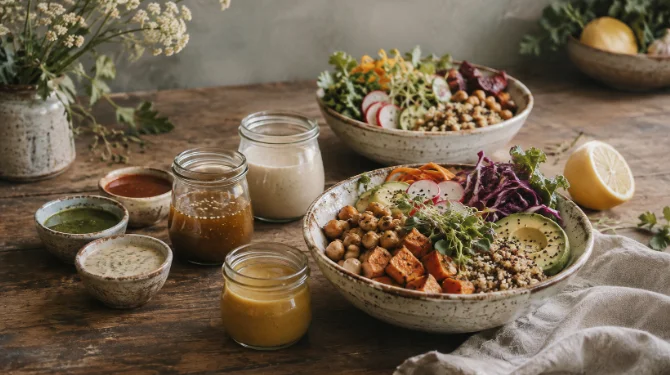
One of the simplest ways to make plant-based meal prep more enjoyable is to keep two contrasting dressings available: a bright vinaigrette and a creamy or savoury dressing.
These two foundations can be adapted with small additions, providing enough variety for several meals without filling your fridge with half-used jars.
Keep One Bright Vinaigrette Available
A simple vinaigrette works with fresh vegetables, grain salads, beans and roasted vegetables.
For a basic batch, combine:
- 3 tablespoons extra-virgin olive oil or canola oil
- 1 tablespoon lemon juice or vinegar
- 1 teaspoon Dijon mustard
- Salt and black pepper to taste
Whisk together or shake in a sealed jar. This makes approximately 65 mL, enough for two or three lunches depending on portion size.
For a sharper dressing, use a two-to-one ratio of oil to acid. For something milder, increase the proportion of oil.
Prepare One Creamy or Savoury Dressing
Tahini is a particularly useful starting point because it creates a creamy dressing without requiring dairy or added oil.
Combine:
- 2 tablespoons tahini
- 1 tablespoon fresh lemon juice
- 2 tablespoons water
- ¼ teaspoon garlic powder
- A pinch of salt
Whisk until smooth, adding a little more water if necessary. The dressing works well with chickpeas, roasted vegetables, quinoa and kale.
Silken tofu, unsweetened plant-based yogurt and sunflower seed butter are other useful creamy bases.
Change the Flavour Without Starting from Scratch
Set aside a portion of your basic dressing and give it a different flavour with one or two additions.
A spoonful of maple syrup and extra Dijon transforms a simple vinaigrette into a sweeter mustard dressing. Dried oregano creates a Mediterranean-style flavour, while fresh dill works particularly well with cucumber and potatoes.
Tahini dressing can become earthier with cumin, spicier with chilli flakes or more savoury with a little miso.
The Dressing Builder makes it easier to experiment with different bases, acids and flavour combinations using ingredients you already have.
Make-Ahead Salads That Stay Fresh
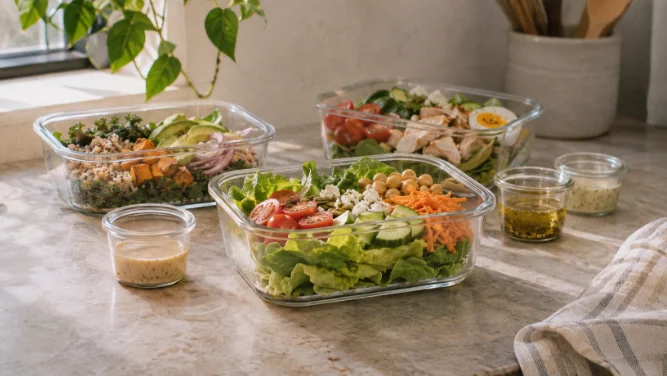
The biggest challenge with preparing salads in advance is controlling moisture. A salad that looks crisp when you assemble it can become watery and unappealing if the ingredients release too much liquid during storage.
Start with vegetables that retain their texture well. Cabbage, carrots, kale and bell peppers are generally more suitable for advance preparation than delicate lettuce or sliced tomatoes.
Dry washed greens thoroughly, drain canned legumes and refrigerate cooked grains before combining them with fresh ingredients.
Pack the dressing separately whenever possible. For layered salads, place the dressing beneath sturdy vegetables and keep delicate greens at the top.
A few small changes in ingredient preparation and storage can make a significant difference when it comes to keeping meal prep salads crisp.
Salads containing cabbage or kale can tolerate some dressing in advance, but crunchy toppings and ingredients such as avocado are usually better added shortly before eating.
Grain Bowls for Days When You Need Something Heartier
Grain bowls are particularly useful when you want a substantial lunch that can be eaten warm or cold.
A practical starting point for one bowl is:
- ½–¾ cup cooked whole grains
- ½–¾ cup cooked beans, lentils or other plant protein
- 1–2 cups vegetables
- 1–2 tablespoons homemade dressing
- A small handful of fresh herbs or seeds
Adjust these quantities according to your appetite and the ingredients you are using.
For a cold lunch, quinoa and barley work well with chopped vegetables, chickpeas and vinaigrette. For a warm lunch, brown rice, tofu and roasted broccoli pair naturally with miso-ginger dressing.
The advantage of choosing the right grain bowl dressing is that you can turn the same basic ingredients into meals with completely different flavour profiles.
Grain bowls are also convenient for workplaces without a microwave. Properly cooked, cooled and refrigerated grains can be served cold with vegetables, plant proteins and dressing.
Adjusting Your Meal Prep to the Canadian Seasons
A sustainable meal prep routine should adapt to the ingredients available throughout the year. There is little reason to rely on the same vegetables in February that you would normally buy in August.
Spring and Summer Lunches
As fresh local produce becomes more widely available, lighter salads and grain bowls become particularly appealing.
Depending on your region and the growing season, useful ingredients include:
- Lettuce and spinach
- Radishes
- Cucumbers
- Tomatoes
- Green beans
- Fresh peas
- Fresh herbs
- Sweet peppers
Combine these vegetables with quinoa, chickpeas or lentils, and finish with lemon vinaigrette, herb dressing or a light apple cider dressing.
When temperatures rise, pay particular attention to keeping packed lunches cold during transportation.
Autumn and Winter Lunches
Colder months are an opportunity to build meals around hardy greens, stored vegetables and pantry staples.
Foodland Ontario’s seasonal availability guide, for example, lists carrots as available year-round and identifies cabbage and winter squash among produce available during winter. Growing seasons and regional availability differ elsewhere in Canada. Foodland Ontario
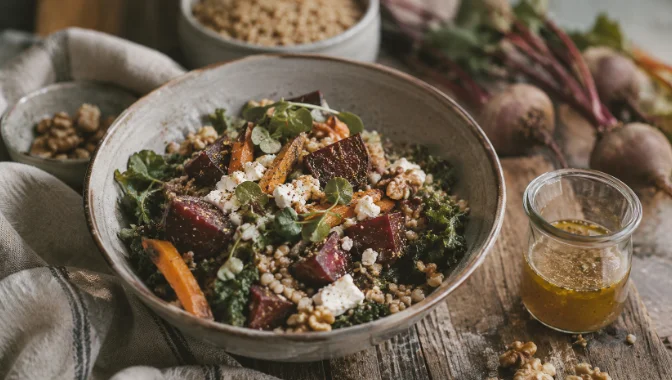
Roasted carrots, beets, parsnips and squash combine well with barley, lentils and chickpeas. Shredded cabbage provides freshness and crunch when delicate salad greens are less convenient.
Having a few dressings that work with winter vegetables makes seasonal cooking much more flexible during the colder months.
Using Frozen and Canned Ingredients
Fresh produce is not always the most practical option.
Frozen broccoli, peas, edamame and spinach allow you to prepare lunches without worrying about using an entire package of fresh vegetables within a few days.
Canned beans, chickpeas and lentils provide another convenient option. Choose lower-sodium or no-salt-added varieties when appropriate, and drain and rinse canned legumes before using them.
Frozen and canned ingredients are particularly helpful when grocery shopping is less frequent or the selection of fresh produce is limited. Cook frozen vegetables according to the package directions before cooling them for cold salads.
What Does a Homemade Plant-Based Lunch Cost?
The cost of a homemade lunch depends on where you shop, package sizes, seasonal availability and how much of each ingredient you actually use.
Rather than relying on a national average that may not reflect your local grocery prices, calculate the cost of individual portions.
Cost per Usable Portion
Divide the purchase price by the number of portions the ingredient provides.
For example, if a package of lentils costs C$4.00 and provides eight usable portions, each portion costs C$0.50.
For canned ingredients, calculate portions using the drained contents rather than the total weight, which may include liquid that you discard.
Cost of Homemade Dressing
Dressing ingredients are typically purchased in larger quantities than you need for a single batch.
Suppose a 500 mL bottle of oil costs C$10.00. Using 30 mL in a dressing contributes C$0.60 to the total recipe cost.
Calculate the vinegar, mustard and other ingredients in the same way, then divide the total by the number of servings.
Example Cost of a Finished Lunch
The following is an illustrative calculation using hypothetical ingredient costs in Canadian dollars, not current supermarket prices.
| Ingredient | Example portion cost |
|---|---|
| Cooked barley | C$0.45 |
| Chickpeas | C$0.65 |
| Roasted carrots | C$0.55 |
| Shredded cabbage | C$0.35 |
| Homemade dressing | C$0.40 |
| Pumpkin seeds | C$0.25 |
| Total | C$2.65 |
Your actual costs may be higher or lower depending on your location, purchases and portion sizes. This example also excludes cooking energy and preparation time.
Account for Food Waste
A discounted ingredient is not necessarily economical if half of it ends up in the compost.
If you purchase C$4.00 worth of vegetables but use only half before they spoil, you have effectively spent C$4.00 on the portion you consumed.
Planning several uses for the same ingredients can be more valuable than finding the lowest advertised price. The most economical meal prep routine is often the one that makes good use of what you buy.
A Meal Prep Schedule That Fits Real Life
You do not need to spend an entire Sunday afternoon cooking. Two shorter preparation sessions can offer more flexibility and fresher ingredients than one large weekly batch.
A Short Weekend Preparation Session
Set aside approximately 45–60 minutes for the first preparation session.
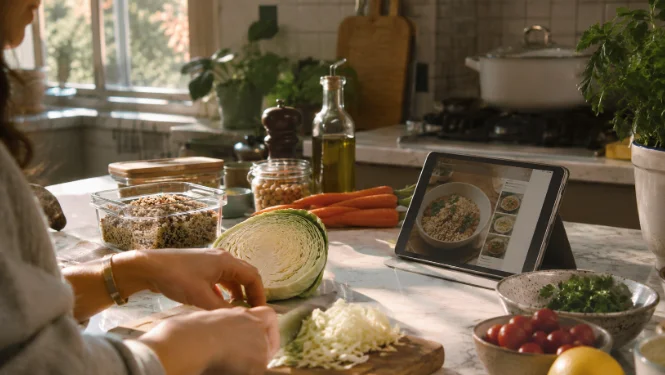
Begin by cooking a batch of grains and legumes, then roast a tray of vegetables while you wash and prepare fresh produce.
Make one vinaigrette and, if needed, a small creamy dressing. Refrigerate cooked components promptly and organize everything into separate containers.
Prepare enough perishable cooked food for the first two or three days, freezing suitable additional portions if you have made more than you need.
A Midweek Refresh
Spend another 20–30 minutes on Tuesday or Wednesday preparing the remaining lunches.
This might involve cooking brown rice, baking tofu, opening a fresh can of chickpeas or preparing another dressing.
Check which vegetables are still available before buying anything else. If there is enough cabbage and carrots for another salad, use them before purchasing more produce.
The midweek session also gives you an opportunity to change the plan according to your appetite and schedule.
Freezing Suitable Components for Later
Cooked lentils, beans and many grains can be frozen in individual portions. This is useful when preparing dried legumes or larger batches of grains.
Freeze portions promptly in suitable containers, label them with the date and thaw them in the refrigerator when needed.
Raw leafy greens intended for salads, sliced cucumbers and delicate fresh vegetables generally do not retain their original texture after freezing. Some emulsified or creamy dressings may also separate.
For those ingredients, smaller fresh batches are usually more practical.
Storing and Transporting Your Lunches Safely
Plant-based meals still require proper food handling. Cooked rice, grains, legumes, tofu and prepared vegetables can support bacterial growth when stored incorrectly.
Health Canada’s general food safety recommendations include:
- Keep refrigerated food at 4°C or colder.
- Refrigerate cooked ingredients promptly in shallow containers.
- Discard perishable food left at room temperature for more than two hours.
- Consume refrigerated leftovers within two to three days or freeze them for later use.
- Keep frozen food at −18°C or colder.
- Transport perishable lunches in an insulated bag with frozen cold packs.
For cooked grains, prompt cooling is especially important. Do not leave a large pot of cooked rice or quinoa sitting on the counter for several hours before transferring it to the fridge.
Label containers with their preparation dates and remember that combining older ingredients with freshly prepared vegetables does not reset their storage period.
When transporting lunch to work, school or university, refrigerate it upon arrival whenever possible. If refrigeration is unavailable, use an insulated lunch bag with sufficient cold packs to maintain a safe temperature until lunchtime.
Never rely solely on appearance or smell to determine whether leftovers are safe to eat. canada.ca+2
Making Meal Planning Easier with Simple Tools
Meal planning should reduce the number of decisions you make during the week, not introduce another complicated household task.
A few simple tools can make the process more manageable, particularly when shopping and cooking responsibilities are shared.
A Shared Grocery List
A shared grocery list helps prevent duplicate purchases and allows household members to add ingredients as supplies run low.
Organize the list into broad categories such as produce, pantry staples, refrigerated ingredients and frozen foods.
Before adding something new, check whether an ingredient already in the kitchen could serve the same purpose. This is particularly useful for grains, legumes and dressings, where substitutions are often straightforward.
Portion and Dressing Calculators
Preparing lunch for one person is different from preparing meals for an entire household.
A portion calculator helps you adjust ingredient quantities without guessing. Similarly, a dressing calculator can help you prepare enough vinaigrette for several lunches without making an unnecessarily large batch.
If keeping track of ingredients, portions and shopping lists feels like another household chore, digital tools for everyday meal planning can help simplify the process.
A basic notes app or shared document may be all you need. More elaborate tools make sense only if they solve a specific recurring problem.
Saving Meal Combinations That Work
Instead of collecting hundreds of recipes, keep a short list of meals you genuinely enjoy.
Record the base ingredients, preferred dressing and any changes worth remembering. You might discover that you consistently prefer barley with maple Dijon, quinoa with lemon tahini and brown rice with miso-ginger dressing.
Over time, these combinations become a personal collection of reliable lunches that require very little planning.
Start with Three Lunches, Not a Perfect Five-Day Plan
The easiest way to establish a lasting meal prep routine is to start smaller than you think you need to.
Prepare two versatile bases, a couple of plant proteins, several vegetables and two dressings. Use them to assemble three lunches rather than committing to an entire week of prepared meals.
Pay attention to which ingredients retain their texture, which combinations leave you satisfied and which dressings you look forward to eating again. Adjust your shopping list accordingly.
A good plant-based lunch meal prep routine is not measured by how many identical containers fit in your fridge. It is measured by how easily you can put together a satisfying meal when lunchtime arrives, how effectively you use the food you purchase and how much you enjoy eating what you have prepared.
Start with the ingredients already in your kitchen, make a dressing you love and build from there.